Sunday, July 26, 2026

Meme is mightier than the sword


"First they ignore you, then they laugh at you, then they fight you, then you win" - Mahatma Gandhi

It was so heartening to witness the Insta-nt generation’s victory of demo-crazy. Having been fascinated by how Mahatma Gandhi fought the British through non-violence, I am delighted to have witnessed an abbreviated, Instagrammable version of it in my own lifetime. By a bunch of youngsters who apparently had nothing better to do (because their exam papers were leaked) armed with smartphones, memes, reels, sarcastic placards, satire, dark humour, and pop-culture references.

Gandhi didn’t defeat power by matching its power. Gen Z simply upgraded the philosophy.
Gandhi had the spinning wheel. Gen Z has Canva.
Gandhi had slogans. Gen Z has Instagram.
Gandhi gave speeches. Gen Z made memes.
Gandhi fasted. Gen Z fasted and took selfies about it.
And while Gandhi walked to Dandi, Gen Z gathered at Jantar Mantar
Less distance, less blisters. Very efficient. A social media user summed it up: “Instagram open karte hi Jantar Mantar pahunch jaata hun.”

Thank you, Abhijeet Dipke, Saurav Das and Ashutosh Ranka. And thank you, CJI Surya Kant, who in my opinion, is the co-founder of the Cockroach Janta Party. Nobody launches a movement faster than a judge with a bad metaphor and a live mic. On May 15, the CJI's remark equating unemployed youngsters to cockroaches went viral. While he later clarified that he was misquoted, that was like sending “that's not what I meant” in a WhatsApp group after everyone has already screenshotted your message. (It is a different matter altogether how CJI can call anybody 'cockroaches' during a formal court hearing, but that is for another day.)

Within days, the insult had been reclaimed. The cockroach became a symbol of resilience: impossible to ignore, difficult to kill, and somehow capable of surviving almost anything, including Delhi summer and  Delhi air.

On May 16, Dipke posted on X: “What if all cockroaches came together?” Well, they did. And the CJP was born. When CJP was launched, its eligibility criteria sounded like the perfect Indian startup pitch: unemployed, lazy, chronically online, professionally frustrated, skilled at venting, and, most importantly, possessing a smartphone with sufficient battery. No fundable product required (ahem, ahem - my pet peeve with founders). The seed capital was pure spite.

The traditional political party needs an ideology to rally around. CJP needed Wi-Fi. The traditional political party has a youth wing. CJP has all the youth. And the memes. And CJP turned Jantar Mantar into something between a political rally, a stand-up comedy and a content-creation festival, with occasional lathi charges and tear gas attacks.

There were serious demands. There were serious grievances. And then there were the placards that were better than the speeches:
“Make in India, not leak in India”
“Chowkidar to bolo, malik aaya hai”
“Even my pads doesn’t leak this much”
“Bade bade deshon me chote chott bachon ko nahi marte”

Spiderman, Superman, Batman, Marvel, Melodi, Subway Surfers, movie references, viral Instagram trends, and practically anything that had survived the internet for more than 24 hours, found its way onto protest posters.

And perhaps that is what makes humour such a lethal weapon. Because once power becomes a meme, it becomes difficult to maintain the aura of invincibility. Governments know how to handle anger, slogans, and fiery speeches. But humour? That's awkward. Everyone loves a good joke. Even the people the joke is about.

The rulers can arrest a protester. They can remove a banner. They can block a road. They can switch off the internet. But how do you counter a 17-year-old whose meme gets five million views and your own family has also liked it? Good luck issuing a press release against that.

The sheer volume of memes generated by CJP could probably fill a large public library. Maybe somebody should open ‘The Cockroach Meme Library’. The librarian would be an Instagram algorithm. The membership criteria would be:

  • Have Instagram
  • Have a sense of humour
  • Know to make memes and shorts
  • And most importantly, have a spine (and that disqualifies most all other generations)

This doesn’t mean Gen Z is unserious. They simply refuse to behave seriously while talking about serious stuff. Laughing at the fire doesn't mean you didn't notice the building.

CJP began as a meme. Then Sonam Wangchuk arrived. The man who has spent years working on education, sustainability, and Ladakh’s development, gave the movement moral authority and a human face. From freezing water into ice stupas in Ladakh to freezing government responses through a hunger strike.

The triple-engine government machinery deployed its usual toolkit: dismiss, discredit, question motives, threaten, bully and, when necessary, used force. Unfortunately, there was one problem. Cockroaches are notoriously difficult to eliminate. If you try to squash one, there are another fifty watching from behind the fridge, and in this case with mobile phones in hand making reels.

There is something deliciously ironic about CJI calling youth cockroaches, since cockroaches can survive extreme conditions, including living for days without a head, going a month without food, holding their breath for forty minutes, or surviving radiation. Basically, nature designed them for Indian politics.

The movement eventually became large enough to force a major political response, culminating in Education Minister Dharmendra Pradhan's resignation on July 25. Turns out cockroaches don't just survive the apocalypse. Sometimes they cause a minor cabinet reshuffle too. You couldn't write this stuff. Actually, you could. But then nobody would believe you.

There is, however, one slightly depressing part of this entire episode. Only a tiny lot of celebrities and influencers threw their weight behind the movement. Democracy is not a spectator sport. You cannot sit in the living room, watch young people get beaten up, forward three WhatsApp messages about democracy and then congratulate yourself for having participated. It is like liking a gym selfie and calling it exercise. At some point, you have to show up.

A long while ago, I wrote a blog on why people should vote. My argument then was simple: democracy doesn't work if citizens treat elections as an occasional inconvenience. They need to participate. The same principle applies to protest.

Voting says “I want a say in who governs me.” Protesting says “I don't agree with what you are doing.” Neither requires you to hate the country. Neither requires you to belong to a political party. And neither requires you to agree with everything others say. Democracy is not the art of agreeing with everybody. It is the freedom to disagree without being crushed for doing so.

Perhaps this is what democracy looks like today. It looks like thousands of young people standing in Jantar Mantar holding cardboard signs. It looks like a rubber duck facing a water cannon. It looks like a British protester making a Rick Astley joke about Brexit. That doesn't make democracy weaker. It actually makes it stronger.

I am not sure what CJP will become next. Perhaps it will disappear now that its immediate objective has been achieved. Perhaps it will evolve into something larger. Perhaps the cockroaches will go back to Instagram, reels, and their doomscrolling. Perhaps some will enter politics, though that would be the worst possible outcome. Because then we may have to deal with politicians who understand memes. God help us then. Maybe his Instagram notification will alert him.

But after all this, if you still think the youth are irrelevant, unemployed, lazy, chronically online and easily inconvenienced, I have one small suggestion. Don't call them cockroaches. Because they might just come together. And then you have a Cockroach Janta Party to deal with. And apparently, they know how to win issues without being political or contesting an election.

I wonder what will happen when Gen Alpha enters the political scene with AI! Till then, vastaguna huiyee..

Long live demo-crazy. Long live the Insta-nt generation. Long live the cockroaches.

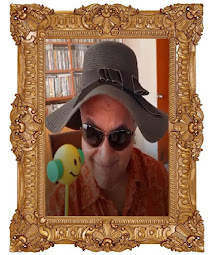
PS : That’s my daughter filming from the background when 'Spider-Man: No Way Home' entered the CJP protest at Freedom Park, Bangalore.

Friday, October 24, 2025

Pati, Patni Aur Woh

Bigamy is having one wife too many. Monogamy is the same. - Oscar Wilde

This is a story of a pati (n. husband, in Hindi), a patni (n. wife, in Hindi) and woh (pron. he/she, here in reference to Patni Computers, the company I led the acquisition of) or pati patni aur woh.

As with most of my other posts, this will be better appreciated by married ‘men’, because it oozes of pain, suffering, and the occasional delusion of happiness. Though to be politically correct, let us just say it would be better understood by married people in general (btw who coined this phrase ‘politically correct’? There is nothing ‘correct’ about ‘politics’!).

I have been married (yes, needlessly!) for about eleven years now. Thank you thank you, for your sym-pathies with this pati. We have been successful so far because we are ‘happily incompatible’. I realized early on that in marriage I can either be happy or right, and I chose to be happy.

It would be a gross understatement if I said marriage changed my life. Before marriage, my hobbies were reading books and playing sports. Now they include shopping, eating out, and meeting social commitments I don’t remember agreeing to. But interestingly marriage did help my career, as I started spending more time at work. And those thinking that I did it to stay away from home are reading too much between the lines (though not wrong)!

Then calamity struck twice. A year ago, I acquired another patni. And this time around too I missed getting a trophy wife! I felt like the person who lost everything in Gujarat earthquake and set up a new ecosystem in Velankanni and the got hit by Tsunami. As they say, marriage is like the army – everyone complains, but you would be surprised how many re-enlist. I was getting used to the (so inappropriately called and imaginary) ‘marital bliss’ when marriage hit me again. Hard. Without notice. Though to be fair, disasters never send a calendar invite. But people who have seen me can understand that there is only so much that my fragile body can take.

It is said that bigamy is when a man tries to serve two masters. Earlier, I had to consider the whims and fancies of one, now I have to consider whims and fancies of two. Double the drama and double the damage. I was not even able to provide time and attention to one patni (intentionally, you might say, but I will publically refute) and now imagine the stress on me with two.

One would cry for attention exactly when the other does. Needless to say, both would also ignore me at the same time. Nowadays I spend three days a week with the new patni and the rest with old patni. It also does not help matters that they are in two different cities – new one in Mumbai and old one in Bangalore.

Normally when you’re with one woman, you don’t talk to her about your other women (atleast I don’t). It’s too much information and it doesn’t help your cause. It’s basic survival instinct. Unfortunately, in my case both the patnis know about each other and fight over each other. I feel like Truffaldino in The Servant of Two Masters, except I don’t even get a script or applause. As if it is not enough trouble, the penalty for bigamy is having two mothers-in-law. Despite that, I try to convince each patni that she is the only trouble, sorry pebble, on my beach.

Lately, I have started to envy A Raja and Suresh Kalmadi for the peaceful time they are spending in Tiharjail. What solitude they must be enjoying. No arguments, no “you never listen,” no weekend plans. Just cricket, Olympics, and peace. I am sure they might not have applied for bail despite having just one patni. Maybe I should quickly try to get into a scam and get arrested.

No one can serve two masters, for either he will hate the one and love the other; or else he will be devoted to one and despise the other. Matthew 6:24

PS : This blog was written back in January 2012 but somehow never got published.

Monday, January 31, 2022

Mirror Mirror on the wall, who’s the funniest of them all?


This is an ode to one of the funniest human beings. A doyen of Carnatic music and a member of the erstwhile royal family (or should I say despite being), he is also one of the simplest men I have ever seen.

Prince Rama Varma or fondly known as Varmaji, a descendent of Maharaja Swathi Thirunal and a disciple of Dr Mangalampalli Balamuralikrishna, is a well-known figure among Carnatic music aficionados around the world. There is enough and more written about his musical prowess and achievements. However not everyone has a full appreciation of the sense of humour he possesses.

There is a perception that all Carnatic musicians are elitist and a very serious lot.  Varmaji is the first person to admit this in spite of being a Carnatic musician. That is no different from the view I hold of accountants, despite being an accountant myself. The truth is there is no bigger exception to that view about Carnatic musicians than Varmaji.

You may wonder on what basis am I making such a tall claim. Being born with 207 bones (extra one being a large funny bone), I can identify a humour sapien from a distance. I attended couple of his music workshops and got two for the price of one – it was both a music workshop and a standup comedy!

Given his virtuosity in music, I would classify his humour into saptha swara hasya:

Shadjam or ‘sa’ hasyam (sarcasm)

It is funny when Varamaji calls the event organisers as The Boss, Mr Fine Arts, etc and compares them to Mr Universe and Mr World and states that we can do anything in the sessions only with their blessings. However, it is unfortunate that his sarcasm is often lost on people.

Varmaji chided the signers who have a wrong perception that the more complex songs and ragas they sing, the more superior a musician they are. He recollected singing a Nottu Swaram in Madras Music Academy (purported mecca of Carnatic music) and added that if a legend like Muthuswami Dikshitar can compose it, then he can very well sing it.

He also took a dig at the composers saying that the content of all Carnatic music lyrics is normally sad. He feels it will always have them crying to God and complaining that God is not being considerate despite praying for long. This also shows his concern at the lack of variety in the subject of Carnatic music.

Talking about the importance of knowing the language of the song and using correct diction, he gave the amusing example of a famous singer from Kerala who has sung in many languages, which he feels all sounded like in Malayalam.

Rishabham or ‘ri’ hasyam (irony)

In a session, Varmaji asked everyone if they had watched the video he had shared before. When a person replied that she had watched a little bit, he responded saying a little bit is more not watched than watched.

When he asked someone to sing swaras of Valachi raga, a lady started singing without announcing herself. He enquired who is singing to which the lady replied ‘me’. He responded saying we all call ourselves ‘me’ and asked her name. And for the rest of the class, she was called ‘me’.

While teaching a Tillana, he asked out of the blue if the singer could drive a car. Surprised, she answered in the affirmative. To which he replied that if one could drive a car, one could sing a Tillana too because while driving you have to focus on clutch, brake, accelerator, gear, steering, etc and that singing a Tillana is also similar.

At the end of the workshop, the participants presented gratitude messages to him, to which he replied that if he were a millionaire (which he is not because he is a billionaire!), he would have sent flight tickets to all of them for his upcoming concert in Chennai.

Gandharam or ‘ga’ hasyam (caricature)

Varmaji is a great mimic and mimics most famous singers like Balamurali Krishna, MD Ramanathan, etc. He also goes on to explain the method to imitate MD Ramanathan which is by touching the roof of your mouth with the tongue while speaking or singing.

Referring to Mohanam raga, he stated said that the Carnatic musicians’ faces will be so contoured while singing that it will look as if they are experiencing physical pain and that the face will hardly be ‘mohanam’ (pleasant) at all.

While teaching the Kriti ‘Sreesha padmanabha’ in Khamas raga, the first few lines had small ‘ni’. But when big ‘ni’ came, he remarked ‘Big ni was feeling bad since only small ni was coming till now. Now big ni has come and is happy finally’.

Madhyamam or ‘ma’ hasyam (mordant)

The method Varmaji follows to teach is to sing one line at a time and asking the participants to identify the swarams (notes). When asked, one participant guessed the swaram as ‘pa’ to which he blankly replied ‘No, but now you have six more choices.’

While teaching a song which had the word suhasini, the lady was not getting the notes correct. He remarked that atleast you are looking suhasini which is correct, but you should get the notes also correct.

When one singer got the tune correct after a few attempts, he asked her to keep it there and not to change it even in October or November or December. And when one singer didn’t get it right after few attempts, he asked her to listen to the song later, not once or twice, not thrice, not 10, not 20 times, but 200 to 300 times.

Panchamam or ‘pa’ hasyam (puns)

During one session, Varmaji was teaching a song which had the word ‘varadaayaki’. He said that if we  don’t sing the swaras of ‘yaki’ correctly it will be yucky and added that it will be yummy only if we sing correctly.

When a singer was singing the word ‘srikrishnaayanu’ with a pause after ‘srikrishna’, he said you will get more punyam if you sing ‘srikrishnaayanu’ (without pause) than ‘srikrishnaa nayanu’ (with pause).

During a song when two ‘ma’ swaras came together in a line, he asked the participant to think of her uncle (‘mama’) to get it right. While teaching a song which had the term Ratnangi in it, he called on a participant with the name Rathna as it is apt for her to sing that line.

Dhaivatham or ‘da’ hasyam (deadpan/dark)

One of the sessions got extended beyond the stipulated time and Varmaji was getting late for his next session. He excused himself saying he doesn’t want to be called Late Rama Varma.

Voicing his displeasure about the crowd in Dadar flower market during Ganesh Chathurthi in the midst of the pandemic, he stated that people will first buy flowers for the puja and then they will have to buy flowers for the funeral.

Apparently, a group of well-wishers in Hyderabad celebrates his birthday every year. However, when they called him in August this year, he politely declined saying he would like to be around to celebrate his birthday next year also.

Nishadam or ‘ni’ hasyam (anecdotal)

Varmaji narrated an instance when his friend from France had come to Kerala for a 10-day music festival he was organizing. After a few days, when he checked on his friend, the Frenchman replied that everything was fine except that he did not like coconut being added in all food items. So Varmaji took him to a nice 5-star hotel that served continental food. All was well till the dessert came, when to their dismay, they found that the Chocolate Mousse too had coconut shreds sprinkled on it. Varmaji drew parallel of coconut in Kerala cuisine to how gamakams are overused by Carnatic musicians, whether it is required or not.

Varmaji was teaching a Thillana where the phrase ‘Dhir’ was written ‘Dr’. Seeing the confusion of the student, he recounted the story of a great scholar from Mysore who had released an album of Tillanas. Each Tillana started with ‘Dhir Dhir’ but the CD cover said ‘Dr Dr’ for all the songs and Varmaji said he used to think of this CD as ‘Doctor Doctor’ songs.

Varmaji had once surprised Manna De with the rare recording of the song ‘Poocho Na Kaise’ sung by SD Batish, which he played in one of the sessions. Varmaji seems to have more musical gems in his archives than treasure in Nilavara B of Sree Padmanabhaswamy Temple.

Shudha Hasya Sangeetham or Shudha Sangeetha Hasyam

The above are just some examples and I don’t think I have been able do justice to the spontaneous humour he creates with expressions and tone of his voice. If these are the things one could pick from a few formal short group sessions, imagine being a fly on the wall when he is discussing politics or, even better, human behaviour in an informal setting.

In hindsight all that I said above is redundant. Instead I could have just said the man enjoys watching George Carlin, Bill Bailey, Joan Rivers, and Spike Milligan on YouTube!

It really begs the question if he is a comic who is also a musician or a musician who is also a comic.